
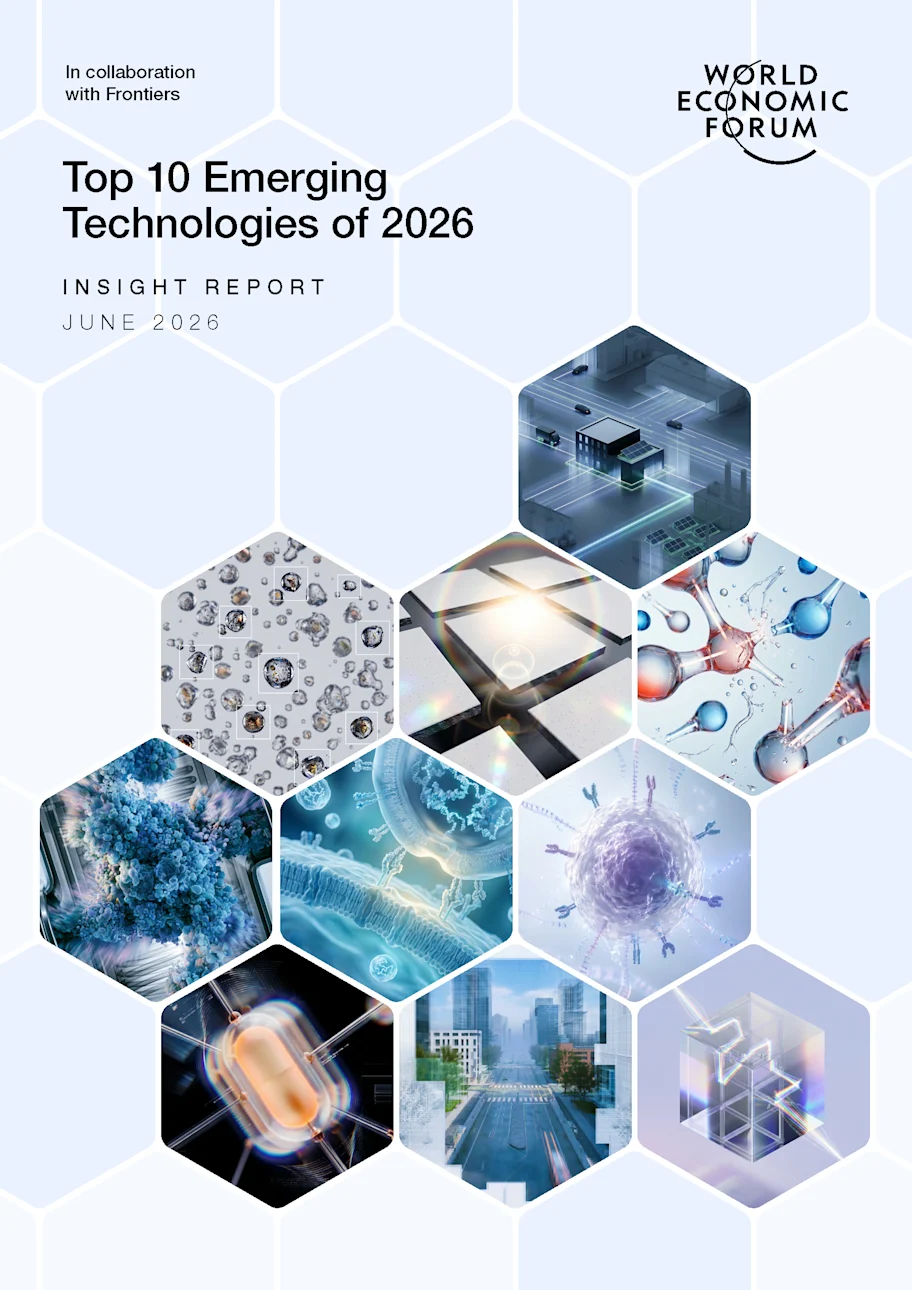
World Economic Forum Reveals the Top 10 Emerging Technologies That Will Shape the Next Decade
Artificial intelligence may have dominated the technology conversation in recent years, but the next wave of innovation is moving beyond software and into the physical world.
The World Economic Forum (WEF), in partnership with scientific publisher Frontiers, has released its Top 10 Emerging Technologies of 2026 report, highlighting innovations expected to transform industries, healthcare, energy systems, manufacturing, and global infrastructure over the next five years.
Unlike previous years, where AI software led most discussions, the latest report shows that the greatest technological breakthroughs are increasingly focused on solving real-world challenges through physical systems.
From Digital AI to Real-World Infrastructure
According to the report, eight of the ten emerging technologies directly impact physical infrastructure rather than purely digital applications.
Researchers believe future competitive advantages will increasingly depend on controlling energy networks, advanced manufacturing, biological engineering, industrial materials, and critical infrastructure rather than software alone.
The report also highlights another major trend: many of these technologies decentralize production, allowing essential goods such as energy, medicines, food, and raw materials to be produced closer to where they are needed.
The Top 10 Emerging Technologies of 2026
1. Everything-to-Grid Energy
Electric vehicles, commercial buildings, batteries, and industrial facilities will increasingly become part of the electricity grid itself.
Instead of simply consuming electricity, these distributed assets will store excess energy and return it to the grid during periods of high demand, helping stabilize renewable energy systems.
2. Direct Lithium Extraction
A new generation of engineered extraction systems promises to dramatically accelerate lithium production.
Rather than relying on traditional evaporation ponds that require months or even years, direct lithium extraction can produce battery-grade lithium within hours while using significantly less water.
3. Passive Radiative Cooling Materials
Innovative building materials capable of reflecting sunlight directly back into space can cool buildings naturally without consuming electricity.
These technologies could significantly reduce air-conditioning demand while lowering carbon emissions.
4. PFAS Destruction
Scientists are developing new methods to permanently destroy PFAS, often referred to as “forever chemicals.”
These highly persistent pollutants contaminate drinking water worldwide, and new technologies are finally making it possible to break them down into harmless substances.
5. Precision Fermentation
Instead of relying on agriculture or livestock, precision fermentation uses genetically engineered microorganisms to produce food ingredients, pharmaceuticals, enzymes, and industrial chemicals.
The technology offers a more sustainable and scalable alternative to conventional manufacturing.
6. Exosome Drug Delivery
Researchers are increasingly using exosomes—the body’s natural cellular transport system—to deliver medicines directly to diseased cells.
The approach could significantly improve treatments for cancer, neurological disorders, and other complex diseases.
7. Personalized mRNA Cancer Vaccines
Building on the success of mRNA technology, personalized cancer vaccines are designed specifically for each patient’s tumor.
By training the immune system to recognize unique cancer mutations, these vaccines could dramatically improve treatment effectiveness while reducing recurrence rates.
8. Quantum Simulation for Drug Discovery
Quantum computing is beginning to transform pharmaceutical research.
Advanced quantum simulations allow scientists to predict molecular interactions far more accurately than traditional computers, reducing both development costs and the time required to discover new medicines.
9. World Models
World models represent the next generation of artificial intelligence.
Unlike conventional AI systems that mainly recognize patterns, world models learn how the physical world behaves by combining video, sensor data, text, and other information sources.
These systems could significantly improve robotics, autonomous vehicles, weather prediction, and industrial automation.
10. Lattice-Based Cryptography
As quantum computers become more powerful, current encryption methods may eventually become vulnerable.
Lattice-based cryptography is being developed to protect sensitive information against both classical and future quantum attacks, making it one of the most important cybersecurity technologies of the coming decade.
AI Helps Identify the Technologies of Tomorrow
For the first time, the report itself was produced using an AI-assisted discovery process developed by Frontiers.
Researchers screened more than 1,200 candidate technologies from scientific publications and industry sources before experts evaluated each technology based on its maturity, novelty, and potential real-world impact.
The final list was then reviewed by an international advisory council.
Technology Moving Beyond the Screen
According to the World Economic Forum, this year’s report illustrates a fundamental shift in innovation.
Rather than focusing primarily on digital software, emerging technologies are increasingly addressing some of humanity’s biggest challenges—including clean energy, climate change, food security, advanced medicine, and critical infrastructure.
As governments, researchers, and businesses continue investing in these fields, many of the technologies identified in the report are expected to move rapidly from research laboratories into commercial deployment over the next several years.
The report suggests that the future of innovation will not be defined solely by smarter algorithms, but by technologies capable of transforming the physical systems that power modern society.
Tags: World Economic Forum, Emerging Technologies, Artificial Intelligence, Quantum Computing, Energy Innovation, Precision Fermentation, mRNA Vaccines, Cybersecurity, Future Technology, Frontiers

Leave a Reply